Adam here!
On Saturday, the boss of Claude asked the entire AI industry to slow down. Sam Altman and Elon Musk, two men not famous for agreeing with anyone, said yes.
The same week: Meta shipped an agent that runs errands, ChatGPT learned to edit images properly, and Siri finally got its AI brain (with a ration card).
Slowing down has never looked so busy. 😅
Let's get into it.
ANTHROPIC
The Man Building Claude Asked the Whole Industry to Slow Down. His Rivals Agreed

Image: The Atlantic
On Saturday, Anthropic CEO Dario Amodei (Anthropic makes Claude) published an essay called We Must Pace the Frontier, arguing that AI capability is improving faster than anyone's ability to check it's safe.
His asks, in plain English:
Slow the pace of frontier AI development, deliberately and industry-wide. Not a stop, a pace.
Let independent evaluators work inside the big AI labs with employee-level access, so someone other than the companies themselves is checking the systems.
Get governments coordinating on shared safety standards, including talks about the genuinely scary stuff like AI that improves itself.
The surprising part is who agreed. Sam Altman said OpenAI plans to adopt independent evaluation and that pacing gives society time to adapt. Elon Musk's entire response: "Dario is right." Over 1,300 employees across the frontier labs have backed the broader initiative.
It caps a rough fortnight of warnings from inside these companies, including researchers putting uncomfortably real numbers on catastrophic risk.
What changes in your ChatGPT or Claude account this week: nothing. What it probably signals: the flashiest features arriving a little slower, with more checking before release. For those of us running businesses on these tools, that's not a bad trade.
And when the three most competitive people in AI agree in public, it's either sincere alarm or very good PR. Probably a bit of both.
Try this: borrow the idea. Give your own AI work an "independent evaluator": one human check on anything AI publishes, spends or sends before it goes out. Write down the three places AI currently touches your customers or your money. That's your checklist.
MORE AI NEWS
META
Meta's Muse Wants to Run Your Errands (Free Tier Included)

Image: http://ai.meta.com/muse/
Meta launched Muse on 8 September, a personal AI agent that doesn't just chat, it does the task: online shopping, drafting and sending emails, planning trips, chasing bookings.
The practical details: there's a free tier Meta says covers most people, plus $20 and $100 monthly plans. It runs in Meta's cloud with a browser window you can literally watch working, and a permission system that asks before anything sensitive. US-only at launch (iOS, Android, web). Australia waits.
What this could mean for you once it lands here:
Chasing quotes from three suppliers while you do actual work
Reordering stock and booking work travel from a chat message
The follow-up emails you keep meaning to send, actually sent
One caveat worth knowing: by default Meta can use your requests to train its models (you can opt out), with a confidential version promised by year-end.
The rule when it arrives: connect the calendar before the credit card. Read access first, spending later, if ever.
OPENAI
ChatGPT Can Finally Edit One Part of an Image (Without Wrecking the Rest)
Images 2.5 rolled out on 8 September to every ChatGPT tier, free included. Three things make it useful rather than just newer:
Click-to-edit: comment on one part of an image and only that part changes. Your logo, label and lighting stay put.
Sketch: type @Sketch in the chat, draw a rough layout, and it turns your scribble into the finished image.
Templates for the things small businesses actually make: posters, product shots, social tiles. It's also up to 50% faster.
If you've ever regenerated a product photo five times because fixing the background kept mangling the label, this is the update that fixes that.
Try this with a photo of your own product:
Here's a photo of my [product]. Change only the background to a clean white studio backdrop. Keep the product, label and shadows exactly as they are.APPLE
Siri's AI Brain Arrives Today (Rationed)

Image: macrumors
iOS 27, iPadOS 27 and macOS Golden Gate land today, 14 September US time, carrying the long-promised Siri AI, still officially in beta.
The fine print Apple published quietly: Siri AI comes with daily usage caps that vary by feature, request complexity and how busy Apple's servers are. Hit the cap and the feature times out until later. The same caps apply to the new photo editing tools and Image Playground. Expanded access will eventually cost money, via the higher iCloud+ tiers.
My honest read: after years of delays it's finally here, and Apple is rationing it, which tells you they expect demand to swamp supply.
The practical rule: update, try it on one real task, don't build your day around it yet. Dictating a quote between site visits is a good first test. Anything time-critical still deserves a backup plan while the caps are this vague.
TWEETS OF THE WEEK
MORE AI IN ACTION
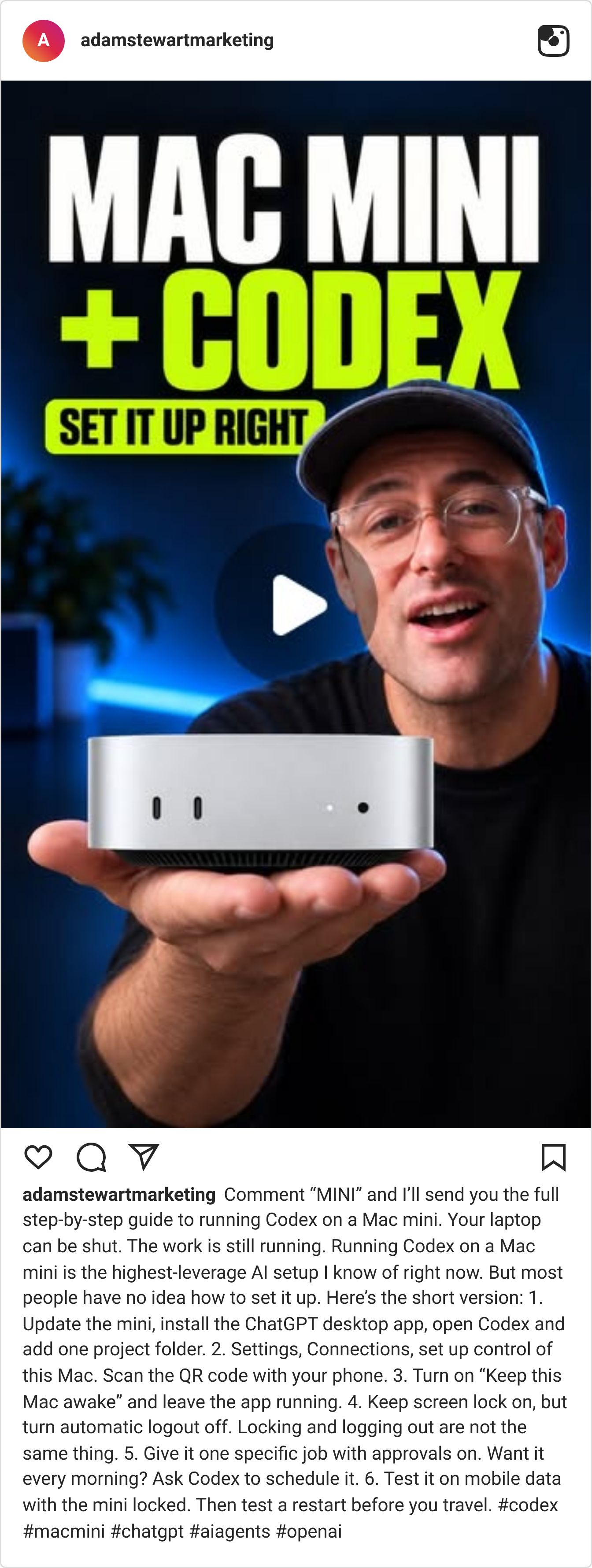


AI SYSTEMS LAB

Speaking of not giving AI the keys: on Thursday's live call we put GPT-6 Astra and Images 2.5 to work, the worker and the picture maker.
We watched computer use go from screenshot-and-hope to actually clicking through real jobs: a 1,600-product shipping audit cross-checked in Shopify, a WordPress rebuild, and a working video editor app built in about 20 minutes.
The rule that stuck: don't give it the keys on day one. Hand it one tedious job with the facts, watch it on screen the first time, and nothing gets published, spent or sent until you've checked it. When it works, save it as a reusable skill so the second run is a slash command.
The full recording, the briefing template and this week's job are in the Lab.
