Adam here!
This week the two biggest AI labs did something unusual: they competed on price.
Anthropic shipped Claude Opus 5.5 on 22 September, saying it does more work for 40% less. The same day, OpenAI answered with GPT-6 Sol and Luna at half the price of the models they replace. And while the labs traded blows, ChatGPT's ads quietly expanded across Asia.
The best AI just got cheaper. The excuse for not using it got more expensive. 😅
Let's get into it.
ANTHROPIC
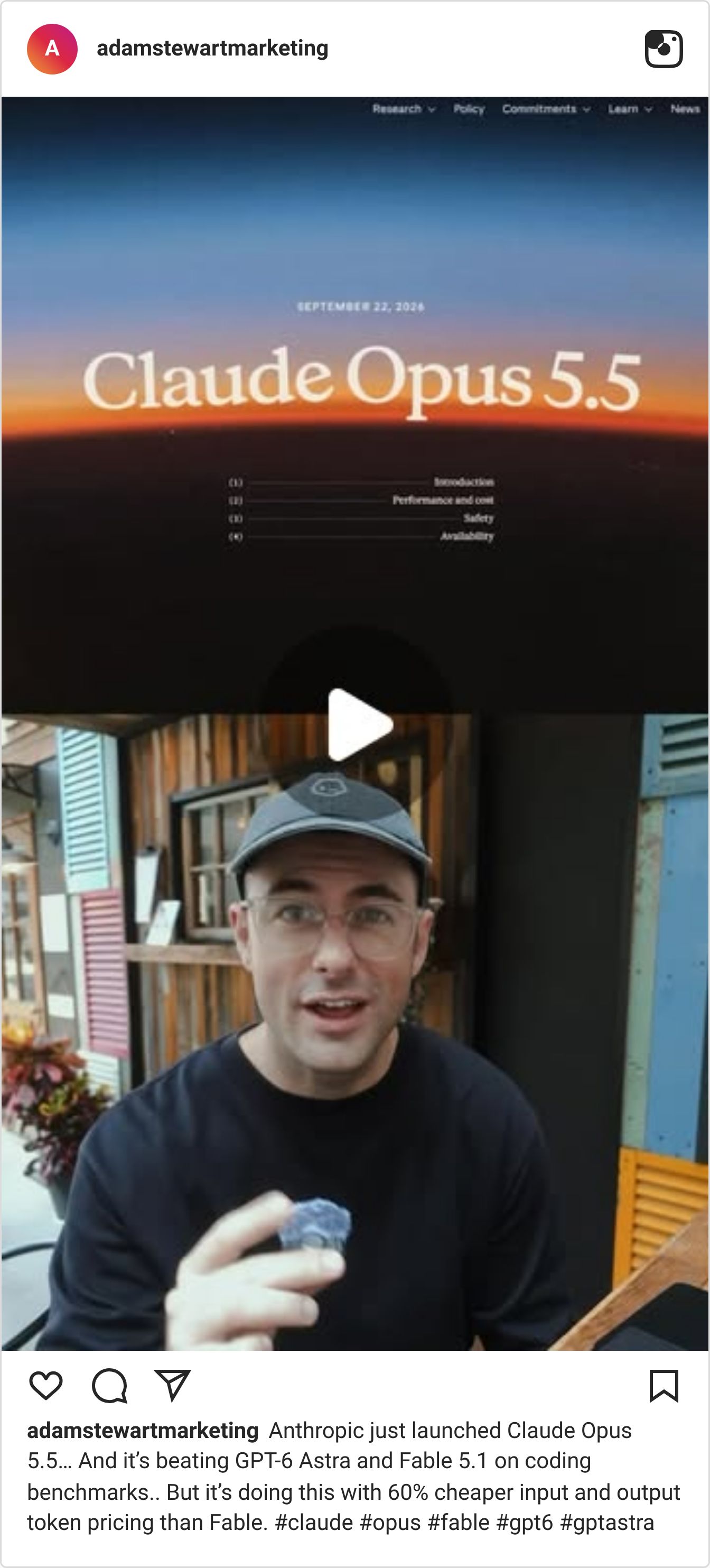
Claude Opus 5.5 Does More Work for 40% Less

Image: Opus 5.5 Announcement
Anthropic released Claude Opus 5.5 on 22 September, and the pitch is unusually simple: better results on real work, at 40% less cost on typical workloads than Opus 5. Those are Anthropic's own reported numbers, but the price list backs them up: cheaper per word in and out, and much cheaper when it re-reads material it has already seen.
The parts that matter if you use Claude for work rather than benchmarks:
It's more than 30% faster at producing output than Opus 5
It writes tighter: the most important information goes up front, with less padding to scroll through
It scored Anthropic's best result to date on its automated behavioural audit, and it's much less likely to take hard-to-reverse actions without asking, which matters as we hand these tools real jobs
It's already live on Pro, Max, Team and Enterprise plans, with higher usage limits
My honest read: the capability jump is probably smaller than the reliability jump. A model that's cheaper, faster, and less likely to do something you didn't ask for is exactly what you want before you give AI a recurring job in your business.
Try this: rerun the last AI task that disappointed you. Same prompt, new model. It's the cheapest upgrade you'll get this year:
Redo this task. Put the most important thing first, keep it tight, and flag anything you would do differently from the earlier attempt below.

[paste your original prompt and the old output]MORE AI NEWS
OPENAI
GPT-6 Sol and Luna: OpenAI's Answer Is a Price Cut

Image: OpenAI
Hours after Opus 5.5 landed, OpenAI released GPT-6 Sol and Luna: faster, cheaper siblings to its top model GPT-6 Astra, at half the price of the models they replace.
The practical question is which model you actually need. A rough guide:
Luna (the cheap one): everyday drafting, summaries and quick questions. It's what Free users now get
Sol (the middle one): most real business work: analysis, documents, automation. OpenAI claims it makes about half the errors of its predecessor
Astra (the expensive one): save it for the genuinely hard problems
The honest read: for everyday tasks, the middle tier from either lab is now more model than most of us actually use. The premium models are for the 10% of work that's truly hard.
Try this: run one real task through the cheap model and the expensive one, side by side. If you can't tell the difference, you've found your default and cut your AI bill in the same afternoon.
CHATGPT VOICE
You Can Now Talk ChatGPT Through Your Inbox

The day after Sol and Luna launched, OpenAI gave ChatGPT Voice a proper upgrade. It now runs on the new GPT-6 models, and more importantly, it can finally use your connected apps mid-conversation.
What that means in practice:
Ask it out loud to check your email, look at your calendar or search Slack, using the connections you've already set up
Voice now works inside ChatGPT Work, so you can hand off a task by talking instead of typing
It's on web, iOS and Android, and Free and Go users get it too (with supported apps). Your existing app permissions and usage limits still apply
Until now, Voice was great for chatting and not much use for actual work, because it couldn't see anything. That gap just closed. It's probably most useful in the car or between meetings, when typing isn't an option.
Try this: on your next drive, open Voice and say "What's on my calendar tomorrow, and is there anything in my inbox I need to reply to before then?" Just check what it reads back before you let it send anything.
CHATGPT ADS
ChatGPT Ads Just Expanded Across Asia

OpenAI switched on ChatGPT Ads in seven more markets across Asia on 23 September. The ad platform now covers more than 60 countries and passed US$1 billion in annualised revenue in under 200 days.
What to know before you spend anything:
Ads show to Free and Go users only; paid subscribers never see them
They're labelled, kept separate from answers, and OpenAI says they don't influence what ChatGPT actually recommends
Eligible businesses get self-service access via Ads Manager, no agency required (though the big agency groups are plugged in too)
Why this matters: your customers are already asking ChatGPT who to buy from, and early ad platforms are usually cheap ad platforms. But it's brand-new territory, so treat it like any new channel: small test budget, one clear offer, measured against what Meta and Google already cost you.
TWEETS OF THE WEEK
MORE AI IN ACTION

AI SYSTEMS LAB

Remember Jev, the decision model that can't make things up, from last week's lead story? On Thursday's Lab call we put it to work.
The short version: Jev answers small, boxed decisions (pick one, rate it, yes or no) in roughly 70 to 500 milliseconds, for around 4 cents per million input tokens. The big models stay for the expensive thinking that comes after the decision.
The live demo was a model router: simple writing goes to a lighter model, strategy goes to the heavy one, and Jev makes the call in between. The same idea works as a step between your inbox and whatever happens next.
This week's job from the call: pick one repeated, low-risk decision in your business, label 20 real examples (include the awkward ones), and test it before you automate anything. Suggestion-only until it earns a place.
The full recording, the walkthrough, and this week's job are in the Lab.
