Adam here!
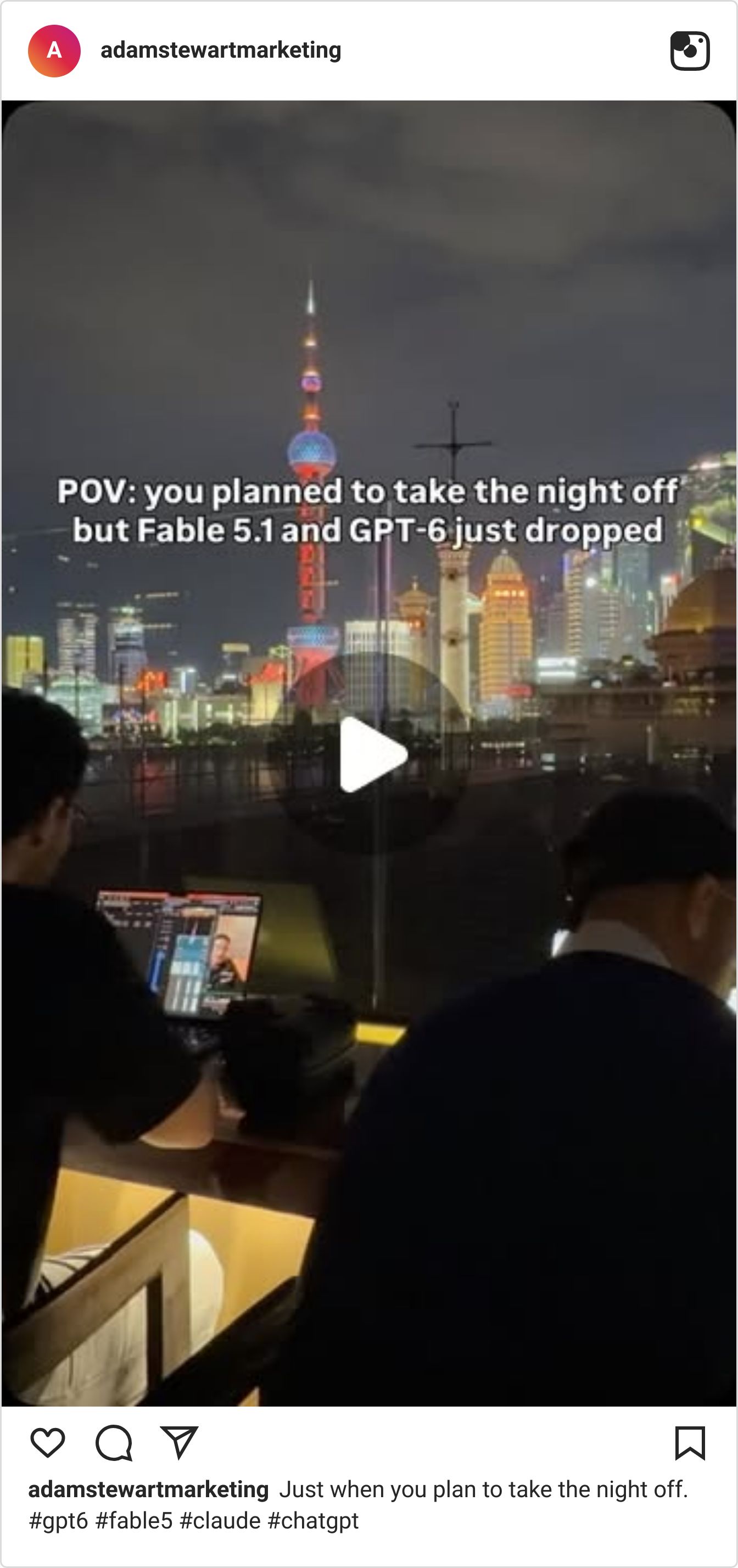
Every major AI lab shipped a new model this week. OpenAI released GPT-6 Astra and declared the start of the "AGI era". Anthropic made Claude cheaper. Google taught Gmail to talk.
Then last Thursday, ChatGPT, Claude and Grok all went down at the same time. 😅
Big week for the machines, in both directions.
None of it requires you to switch tools. But two of these updates could save you real money, and one might change where your ad budget goes.
Let's get into it.
OPENAI
OpenAI Says the "AGI Era" Is Here. The Umpire Disagrees

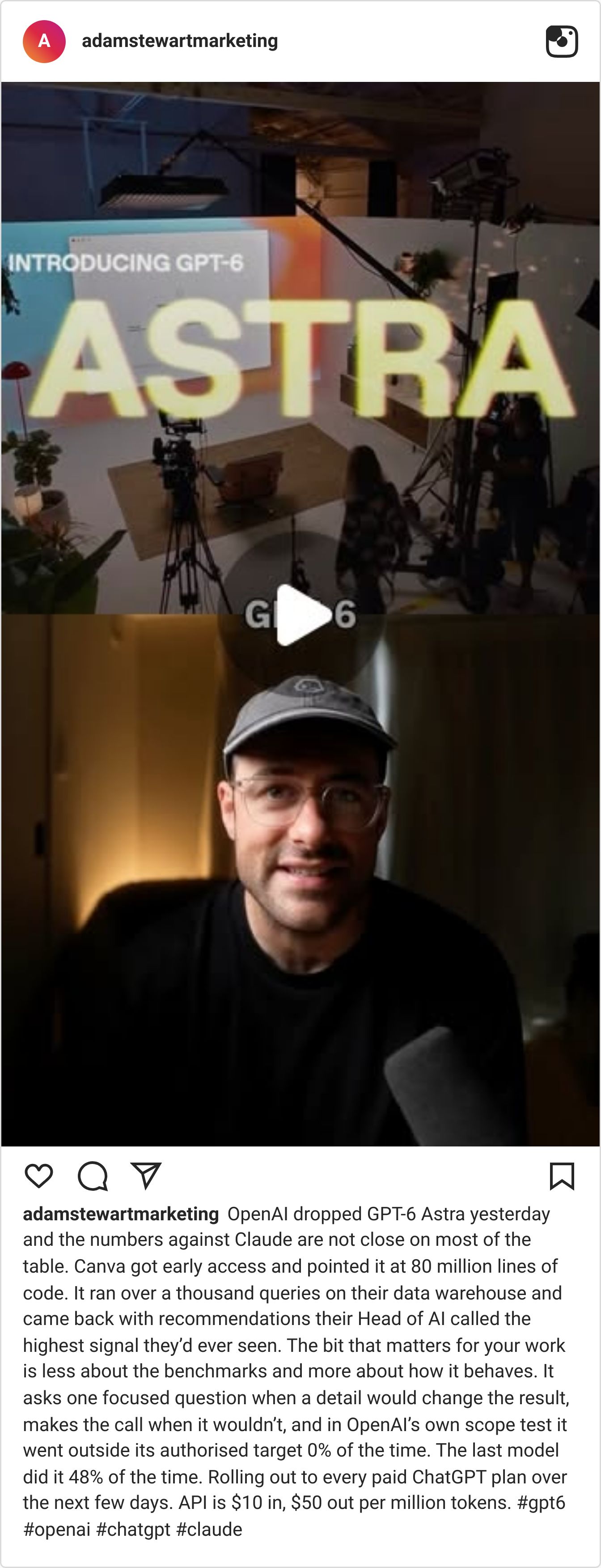
OpenAI released GPT-6 Astra this week, calling it "the world's most intelligent and aligned model". It's rolling out over the coming days to Plus, Pro, Business and Enterprise plans free users miss out for now, and business admins have to switch it on before their teams see it.
OpenAI president Greg Brockman closed the launch with "Welcome to the AGI era." AGI, in plain English, is AI that can do most economically valuable work as well as a person can.
The umpire isn't so sure. ARC Prize, the independent group whose test OpenAI leaned on, scored Astra at 62.7% on its own neutral setup a long way from the 99.9% OpenAI claimed. One analytics firm even found it got worse at a few everyday work categories.
Here's what actually matters for you. Astra is meaningfully better at boring office work:
Filling in forms, updating a CRM and managing calendars about 47% faster at computer-use tasks than its predecessor.
Building spreadsheets and presentations that match your existing templates instead of inventing new formatting.
One wrinkle worth knowing: Astra is the first model OpenAI has rated "Critical" for cyber risk under its own rules it can find brand-new security holes on its own so those abilities are locked away for vetted testers only.
My honest read: a real upgrade for everyday admin, and an oversold milestone. If AGI genuinely arrives, you won't need a press release to notice.
And about Thursday: ChatGPT, Claude and Grok overlapped for roughly 93 minutes of downtime, for what the companies say were unrelated reasons. The takeaway isn't panic it's a plan: know how you'd run your day if your AI tools vanished for an hour.
Try this when Astra lands in your ChatGPT:
I run a [your business type]. Using the figures I paste below, build me a simple weekly cash flow spreadsheet using my categories, and flag anything unusual you notice.MORE AI NEWS
ANTHROPIC
Claude Just Got 25% Cheaper (and Argues With You Less)

Anthropic released Claude Fable 5.1 on Monday, and it's already live everywhere Claude runs the apps, Claude Code and the API. No new subscription, no toggle to find.
The sticker price didn't move. What changed is "caching" the discount Claude gives for re-reading material it has already seen which got 75% cheaper. In practice that works out to roughly 25% off typical use, and up to 45% off long jobs where Claude churns through the same documents repeatedly.
The change you'll actually feel: Claude says no a lot less. Anthropic reports about 85% fewer false alarms on everyday medical and biology questions, and roughly 60% fewer safety interruptions in coding sessions while still blocking the genuinely dangerous stuff.
(There's also a Mythos 5.1 the same model with fewer guardrails, restricted to vetted researchers. You'll never see it, which is rather the point.)
The practical rule: if Claude refused a reasonable request a few months ago, ask again this week. The guardrails were retuned, and the answer may have changed.
AI ADVERTISING
ChatGPT Ads Hit $1 Billion and Now Take Budgets of a Few Dollars a Day

OpenAI says ChatGPT's ad business reached a US$1 billion annualised run rate in under 200 days. ("Run rate" means last month's takings multiplied by twelve the trajectory, not cash in the bank.)
The ads appear for people on the free plan and the $8 "Go" tier in 40+ countries. Paid Plus and Pro plans stay ad-free, and OpenAI insists "Advertising does not influence the answers ChatGPT provides."
The part that matters for small businesses: the self-serve ChatGPT Ads Manager keeps opening up. Europe joined this week, India followed with a daily minimum of about US$7.60, and Australia was reportedly in the first self-serve group back in May. The old US$50K managed-buy entry price is gone.
What this could mean for you:
Your customers are already seeing ads inside free ChatGPT the question is whose.
Ads are text-first (headline, short description, optional image), matched to what the person is asking about closer to search ads than social ads.
There's now a Meta-style pixel and conversion tracking, so you can finally compare results against your existing campaigns.
Try this: run a two-week test at $10 a day on your best-converting offer, and judge it purely on cost per lead against your current Meta campaigns.
Ads inside the AI that was supposed to kill advertising. Took less than a year.
Gmail Can Talk Now (Docs and Keep Too)
From 3 September, Google is rolling out voice conversations across three apps most of us live in, worldwide in English on mobile:
Gmail Live - have a spoken conversation with your inbox ("what did my accountant still need from me?") and get answers with links to the actual emails.
Docs Live - talks you through a first draft out loud, pulling details from Gmail, Drive and Chat as you go.
Keep Live - ramble at it at the end of the day and it hands back a structured list for tomorrow.
The fine print: you need a Google AI Plus, Pro or Ultra subscription; Docs Live skips the cheapest Plus tier; Keep Live is Android-only for now. Business Workspace accounts are "coming soon" so this lands on personal accounts first.
Same fortnight, Google also slipped out Google Pics a prompt-first design tool inside Docs and Slides (its answer to Canva), bundled with most AI plans at no extra cost. Worth experimenting with next time you need a quick social tile.
The obvious use case is dictating a quote between site visits. The sneaky-good one is inbox triage while making coffee.
TWEETS OF THE WEEK
MORE AI IN ACTION
AI SYSTEMS LAB

Speaking of ads: on Thursday's live call we did exactly what this issue keeps hinting at connected Claude and ChatGPT straight to Meta and Google Ads, then wrapped approval rules around them so the weekly check runs itself.
The short version: Meta's official connector is one URL, and it can read and change a live ad account. Google's official one is read-only and much harder to break. Start with reporting, and log in as a limited user on one account.
The rule that stuck with me: don't give it the keys on day one. A prompt is not an access control turn off write access, and spot-check the first answers against Ads Manager before you trust anything.
This week's job from the call: connect Meta's connector to the AI plan you already pay for, ask it the five questions from the lesson, and verify two of the answers yourself.
The full recording and setup guides are in the Lab.
